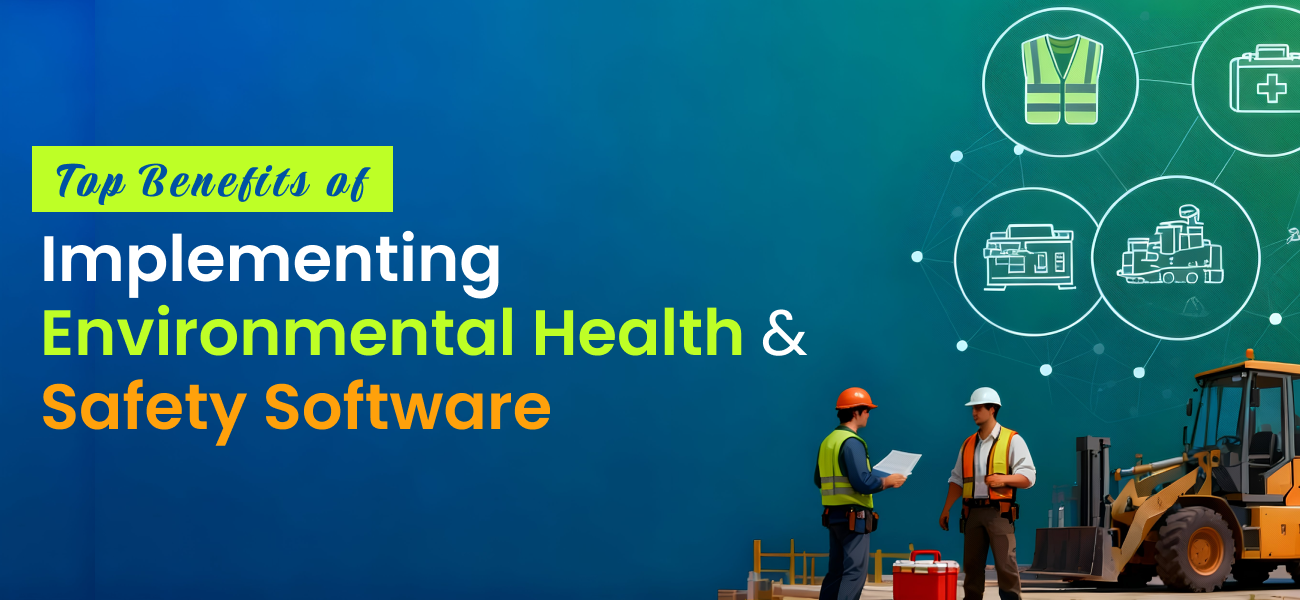
Companies that adopt a robust environmental health & safety (EHS) software often see impressive gains in productivity, cost savings, and compliance. For instance, one study by Verdantix found that organizations using EHS software over five years gained an average ROI of 239 %. Another report suggests that companies implementing EHS management systems achieved a 15 % reduction in operational costs and a 7 % drop in safety incidents.
On the flip side, firms that stick to manual or fragmented systems often suffer. Consider the cost of workplace accidents: in the U.S. alone, direct costs of nonfatal workplace injuries exceeded USD 58.61 billion in one year (Liberty Mutual data), and indirect costs (lost productivity, legal fees, reputational damage) can be several times that. Many companies also incur heavy fines for noncompliance, or see degraded safety culture and repeated audit findings. Some studies show that in sectors using spreadsheets, up to 90 % of spreadsheets contain significant errors that in EHS contexts can lead to regulatory violations or safety gaps.
So the message is clear: without a strong environmental health and safety software underpinning your safety programs, you risk inefficiency, compliance failures, incidents, and reputational damage. It’s imperative to invest in an EHS management system and in the next sections, I’ll walk you through exactly what that means and why it matters.
What Is an EHS Management System (and Why You Need One)
Let’s break it down simply: an environmental health and safety (EHS) software is a digital system that helps organizations manage all the tasks, data, and workflows related to safety, environmental compliance, and health. It replaces manual forms, paper logs, and siloed spreadsheets with a unified, accessible, traceable platform.
Imagine you work in a manufacturing plant, and you need to:
- Log an incident or near-miss
- Assign corrective actions and follow up
- Run safety inspections
- Keep records of training & certifications
- Track environmental metrics (waste, emissions)
- Generate compliance reports for regulators
A good EHS software brings all those things into one place. Instead of having to dig through file cabinets or multiple tools, safety managers, site supervisors, and executives can see real-time dashboards, get alerts, assign tasks, and generate audit-ready reports.
Why do enterprises need this?
- Complex regulations : In many industries and geographies, environmental and safety rules are constantly changing. A software helps you stay on top of updates and compliance obligations.
- Scale & distributed operations : If you have multiple plants, field sites, or remote operations, manual methods break down. A centralized digital system keeps everyone on the same page.
- Error reduction & clarity : Manual systems and spreadsheets are error-prone; in fact, many spreadsheets contain mistakes that can lead to noncompliance.
- Efficiency & speed : Processes like report creation, audits, document retrieval become faster and less painful.
- Accountability & audit trails : You want to know who did what, when, and why for internal controls and external audits.
In short, in today’s environment, an EHS management system is less of a “nice to have” and more of a foundational tool for safety, compliance, and operational excellence.
Benefits of EHS Management Software
Now let’s talk about what you gain when you implement good environmental health safety (EHS) software. I’ll also give simple examples and, where possible, tie benefits to specific industries.
- 1. Improved Safety & Incident Reduction
Because you have real-time visibility into near-misses, risks, and trends, you can act before incidents happen. Many EHS software users report a drop in incident rates of 20 – 40 % after full adoption
Example (Construction / Industrial) : In a plant environment, if supervisors see repeated “slips near machine zone” reports on the dashboard, they can deploy preventive measures (matting, signage, training) before a serious injury occurs.
- 2. Cost Savings & Return on Investment
You’ll reduce costs in many places: fewer compensation claims, less downtime, fewer fines, and lower administrative overhead. As noted earlier, the average ROI from EHS software adoption over 5 years can be ~239 %.
Example (Chemical / Process): Suppose your facility used to spend a lot of time compiling compliance reports manually, pulling in data from separate systems. With automation, you cut that effort by hours per week, which frees up specialists to focus on higher-value safety initiatives.
- 3. Greater Efficiency & Time Savings
Many manual tasks - report generation, audit prep, approvals, notifications can be automated. You reduce back-and-forths, paper shuffling, and lateness in safety tasks. Reports suggest up to 15 % reduction in operational costs by cutting admin waste.
Example (Oil & Gas, Utilities): From field inspections (mobile forms) to automatic alerts on overdue permits, supervisors and safety teams save daily hours.
- 4. Enhanced Compliance & Reduced Risk of Fines
Regulators don’t accept lax record-keeping. With EHS software, you can maintain audit-ready records, generate compliance reports on demand, and quickly respond to inspectors. This reduces the risk of penalties and legal exposure.
Example (Pharma / Food): If a regulator demands a permit history or training record for a batch, you can provide it instantly rather than combing through archives.
- 5. Stronger Safety Culture & Employee Engagement
When employees see that safety is taken seriously that near-miss reporting is easy, that corrective actions are tracked, they engage more. This helps shift safety from compliance-only to values-driven.
Example (Manufacturing): A floor worker uses a mobile app to report a risk. The system notifies a supervisor, who acts, and the worker sees closure, building trust and proactive reporting behavior.
- 6. Better Decision-Making via Analytics
Because all your EHS data is in one place, you can analyze trends, see hotspots, forecast risks, and allocate resources smartly. Some purpose-built platforms give predictive alerts.
Example (Mining / Energy): The EHS team can see that certain shifts or machinery correlate with more near-misses. They can then reassign schedules or maintenance before failure..
- 7. Scalability, Integration & Future Readiness
A modern EHS software can integrate with other corporate systems (ERP, asset management, IoT sensors). As you grow, the system scales. You won’t be tied to patchwork solutions.
Example (Logistics / Supply Chain):As you open new branches, you simply onboard them in the system. Automated data sync ensures consistency across locations.
Frequently Asked Questions (FAQs)
1: How long does it take to see benefits after deploying EHS software
Many organizations report visible improvements (reduced errors, faster reporting) within a few months. Full ROI (e.g. incident reduction, cost savings) typically shows over 12–24 months.
2: Is EHS software only useful for large companies?
Not at all. Even mid-sized companies benefit from structure, compliance, and automation. The gains may be relatively bigger when starting from manual systems.
3: Can it integrate with existing systems (ERP, asset management)?
Yes. Leading environment health & safety ehs software supports integration so you don’t have to duplicate data.
4: What if regulatory rules change. Will we be outdated?
The best environmental health and safety software includes mechanisms (updates, rule libraries, notifications) to adapt to evolving compliance requirements.
5: How secure is the data in EHS software?
A reputable environmental health & safety (ehs) software is built with strong security, role-based access, audit trails, encryption, and cloud backups to protect sensitive safety and compliance records
Conclusion
If you’re searching for one of the best EHS software options out there, look no further than PrimeEHS. As a mature environment health & safety software built for today’s challenges, PrimeEHS brings together powerful modules, real-time analytics, mobile access, and strong integrations. Whether you run a factory, a utility, a chemical plant, or a services enterprise, PrimeEHS helps you reduce incidents, stay compliant, cut costs, and build a positive safety culture.
In a world where losing visibility or missing compliance can cost millions and affect lives, investing in environmental health and safety (ehs) software isn’t optional. It’s essential. Let PrimeEHS be your partner on that journey.