
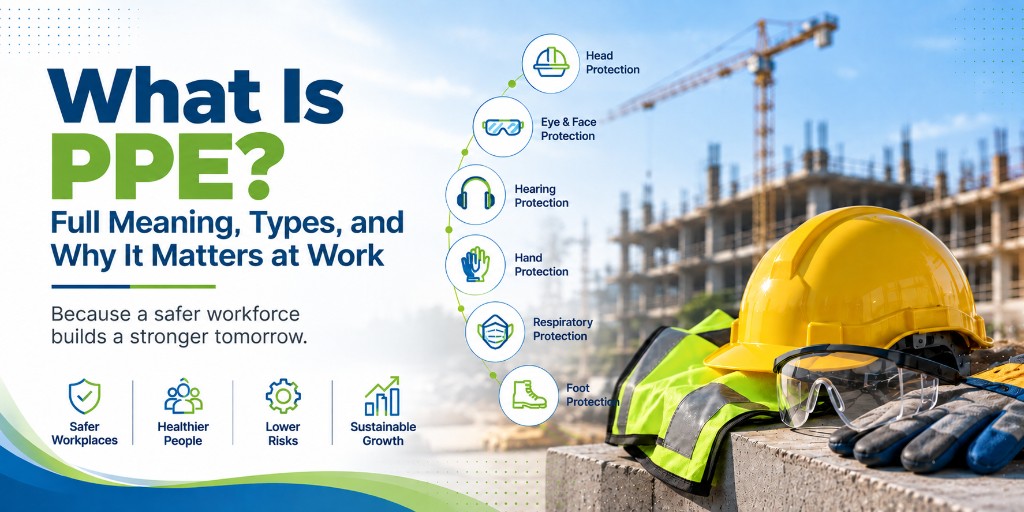
If you have ever searched "what is PPE" or "PPE meaning," you already know the term shows up everywhere, from hospital corridors to construction sites to chemical plants. But most people only know PPE as "the gear you wear to stay safe." In this guide, we will break down what PPE stands for, what it includes, why it exists, who is responsible for it, and how organizations use technology to keep their PPE programs compliant and audit ready.
What Does PPE Stand For?
PPE stands for Personal Protective Equipment. That is the simple answer to "what does PPE stand for" or "ppe stands for what." The full form covers three ideas packed into one phrase:
- Personal – it is worn or used by an individual worker, not shared machinery.
- Protective – its entire purpose is to reduce exposure to a hazard.
- Equipment – it is a physical item, tool, or garment, not a process or a rule.
So, when someone asks, "what is a PPE" or "whats PPE," the short definition is this: PPE is any device, clothing, or gear that a worker wears or uses to protect themselves from injury, illness, or exposure to a hazard while doing their job. The plural form, PPE's, simply refers to multiple pieces of gear used together, such as gloves, goggles, and a hard hat.
PPE Definition: What Is Personal Protective Equipment?
According to OSHA, personal protective equipment is equipment worn to minimize exposure to hazards that cause serious workplace injuries and illnesses, whether chemical, radiological, physical, electrical, mechanical, or biological. NIOSH and the CDC describe PPE the same way, as equipment worn to minimize exposure to hazards, and note that it typically must conform to an established consensus standard such as ANSI or ISEA. In the United Kingdom, the Health and Safety Executive defines PPE under the Personal Protective Equipment at Work Regulations as all equipment, including weather-protection clothing, that a person wears or holds at work to guard against risk to their health or safety.
In plain language, PPE is the protection of the human body from a risk that cannot be fully removed through other means. It sits between a hazard and a person, acting as a barrier. That is the real answer behind searches like "PPE is the protection of," "define PPE," or "define personal protective equipment."
PPE vs Safety Equipment: What Is the Difference?
These two terms are often used interchangeably, but they are not quite the same thing. PPE refers specifically to items worn or carried by an individual, such as a helmet, gloves, or a respirator. Safety equipment is a broader category that also includes fixed or shared items that are not worn by a person, such as guardrails, machine guarding, fire extinguishers, eyewash stations, and ventilation systems.
In the hierarchy of controls described below, most non-PPE safety equipment falls under engineering controls, while PPE is its own separate, final category. Understanding this distinction matters because relying only on PPE, while ignoring fixed safety equipment and engineering controls, is one of the most common gaps found during safety audits.
What Is the Function of PPE?
The function of PPE is to reduce a worker's exposure to a hazard when that hazard cannot be eliminated, substituted, or controlled through engineering or administrative measures. In other words, PPE is a last line of defense, not the first solution.
This is best explained through the hierarchy of controls, a five level framework used by NIOSH and safety regulators worldwide:
- Elimination – physically remove the hazard.
- Substitution – replace the hazard with something less dangerous.
- Engineering controls – isolate people from the hazard using design, guarding, or ventilation.
- Administrative controls – change how people work through training, procedures, and signage.
- Personal Protective Equipment – protect the individual worker when the hazard still remains.
PPE sits at the bottom of this pyramid because it is the least reliable control on its own. It depends entirely on correct selection, proper fit, consistent use, and regular maintenance. A worker who skips a step, wears damaged gear, or uses the wrong type of protection loses the benefit PPE was meant to provide. This is exactly why organizations pair PPE with structured permit to work management and observation and risk management processes rather than relying on equipment alone.
Types of PPE: What Does PPE Equipment Include?
When people search "PPE equipment," "personal protective equipment PPE," or "protective equipment includes," they are usually looking for a breakdown by body part.
| PPE Type | Common Examples | Protects Against |
|---|---|---|
| Head | Hard hats, safety helmets, bump caps | Falling objects, impact, electrical contact |
| Eyes and face | Safety glasses, goggles, face shields | Flying particles, chemical splashes, radiation |
| Hearing | Earplugs, earmuffs | Excessive noise and hearing damage |
| Respiratory | Dust masks, respirators, SCBA | Dust, fumes, vapors, airborne biological hazards |
| Hands | Cut resistant, chemical, or heat resistant gloves | Cuts, chemicals, heat, electrical hazards |
| Feet | Safety boots and shoes | Impact, punctures, slips, electrical hazards |
| Body | Coveralls, aprons, chemical suits, high visibility vests | Chemicals, heat, contamination, visibility risks |
| Fall protection | Harnesses, lanyards, anchor points | Falls from height |
This is the practical answer to "PPE items include," "what is considered PPE," and "PPE usage" questions. Most job sites need a combination of these categories rather than a single item, which is why a proper hazard assessment always comes before PPE is assigned. Reputable PPE is also manufactured to a recognized standard, for example ANSI/ISEA in the United States, EN standards and CE marking in Europe and the UK, and BIS standards such as IS 2925 for helmets, IS 15298 for safety shoes, and IS 4770 for gloves under India's DGFASLI and Factories Act, 1948 framework. Respiratory protection in particular often requires proper fit testing and, in some cases, medical clearance before a worker can rely on it.
How to Choose the Right PPE
Selecting PPE is not a one-time decision, it is a process that should be repeated whenever a task, hazard, or environment changes. A sound PPE selection process generally follows these steps:
- Identify the hazard. Walk through the task and identify what can strike, penetrate, splash, burn, or be inhaled.
- Determine the exposure level. Assess how often and how intensely a worker is exposed to that hazard.
- Select appropriate PPE. Choose equipment rated for the specific hazard, not just a generic category.
- Check fit and compatibility. PPE that does not fit properly, or that conflicts with other PPE being worn at the same time, can create new risks instead of removing them.
- Verify certification or rating. Confirm the item meets the applicable standard, such as ANSI, EN, CE, or BIS, for its claimed protection level.
- Train the worker. Make sure the worker understands when, how, and why to use the equipment.
- Inspect and replace regularly. Build a recurring schedule to check for wear, damage, or expiry, and replace equipment before it fails.
Skipping any of these steps is one of the most common reasons PPE fails to prevent an injury, even when the equipment itself was technically available on site.
Who Is Responsible for PPE?
This is one of the most searched questions after the basic definition, often phrased as "who is responsible for paying for PPE" or "what is your responsibility regarding personal protective equipment." Requirements differ by country, industry, and the specific hazard involved, so always confirm the exact obligations under your local regulation. As a general pattern seen across OSHA, the UK's PPE at Work Regulations, and India's Factories Act framework:
Employer responsibilities generally include:
- Conducting a hazard assessment to identify where PPE is required.
- Selecting and providing appropriate PPE, typically free of charge to the worker, when other controls cannot adequately manage the risk.
- Training workers on when PPE is needed, how to wear it, and how to inspect it.
- Maintaining, repairing, or replacing damaged or expired PPE.
- Monitoring and auditing PPE compliance across the site.
Employee responsibilities generally include:
- Wearing the assigned PPE correctly and consistently.
- Inspecting gear before each use and reporting damage.
- Attending training sessions and following site procedures.
- Storing and cleaning PPE according to guidelines.
Because responsibility is shared, most safety failures happen at the handoff between the two, when training is inconsistent or when equipment inspection is not tracked. Digital tools built for compliance management and a learning management system close this gap by recording who was trained, when PPE was issued, and when it needs replacement.
How to Use PPE Correctly
Owning the right gear is only half the job. Correct use of PPE generally follows this pattern:
- Assess the task and confirm which PPE is required.
- Inspect the equipment for cracks, tears, expired filters, or worn straps before putting it on.
- Don the equipment in the correct sequence, since some items depend on others fitting properly first.
- Use the equipment for the entire duration of exposure, not just part of it.
- Doff (remove) the equipment carefully to avoid transferring contamination to skin, clothing, or the work area.
- Store or dispose of the equipment according to site policy.
Skipping any of these steps is one of the most common causes of preventable workplace injuries, even when the correct PPE was technically available on site.
PPE Across High Risk Industries
The exact type and rating of PPE required changes dramatically by sector. A few examples:
- Construction and infrastructure sites rely heavily on hard hats, fall arrest systems, and high visibility clothing.
- Oil, gas, and refinery operations require flame resistant clothing, gas detectors, and specialized respiratory protection.
- Chemicals and fertiliser plants depend on chemical resistant suits, splash goggles, and full face respirators.
- Power sector workers need arc flash rated clothing and insulated gloves for electrical work.
- Metal and mining operations require respiratory protection against dust along with impact and hearing protection.
Because requirements shift by industry, hazard, and even by task within the same site, a static PPE list quickly becomes outdated. This is why many organizations are moving PPE tracking into structured digital systems rather than spreadsheets.
How EHS Software Strengthens Your PPE Program
Knowing what PPE is and owning the right equipment is not enough on its own. The organizations with the fewest PPE related incidents are the ones that can answer three questions at any moment: who has been trained, what condition is the equipment in, and where are the gaps.
This is where a connected EHS platform makes the difference:
- Permit to Work Management ensures PPE requirements are checked and signed off before high risk work begins.
- Observation and Risk Management lets supervisors log PPE non-compliance in real time from the field.
- Audit and CAPA Management turns recurring PPE gaps into tracked corrective actions instead of one-off warnings.
- Asset Management keeps a record of PPE inventory, inspection dates, and replacement schedules.
- Incident Management links injuries back to whether the correct PPE was worn, so root causes are never guesswork.
- Learning Management System confirms every worker has completed PPE training before stepping on site.
Instead of PPE compliance living in paper checklists, it becomes part of one connected safety record that is always audit ready. If you want to see how this looks for your specific industry, you can explore PrimeEHS's full platform or get in touch with our team.
Frequently Asked Questions
What is PPE in simple words?
PPE is any equipment or clothing worn by a person to protect themselves from a workplace hazard, such as gloves, goggles, or a hard hat.
What does PPE stand for?
Personal Protective Equipment.
Is PPE required by law?
PPE requirements depend on the country, industry, workplace hazards, and applicable regulations. In many jurisdictions, including under OSHA in the United States, the PPE at Work Regulations in the UK, and the Factories Act, 1948 in India, employers must assess hazards and provide appropriate PPE when other controls do not adequately protect workers. Always check the specific regulation that applies to your location and industry.
What is the difference between PPE and safety equipment?
PPE is a subset of safety equipment. Safety equipment can include fixed items like guardrails or fire extinguishers, while PPE specifically refers to items worn or carried by an individual.
Who pays for PPE?
In many jurisdictions, employers are required to provide PPE at no cost to the employee when it is needed to control a workplace hazard, though the exact rule, and any exceptions, depend on local law. It is best to confirm this against the specific regulation in your country or state.
What are the main types of PPE?
Head, eye and face, hearing, respiratory, hand, foot, body, and fall protection are the eight broad categories most safety programs cover.
Final Thoughts
PPE meaning is simple on the surface, personal protective equipment that shields a worker from a hazard, but running an effective PPE program is far more complex. It depends on accurate hazard assessments, consistent training, proper inspection, and clear accountability between employers and employees. To understand how PPE fits into a broader safety framework, read our guide on what Environment, Health and Safety (EHS) really means.
If your organization is still tracking PPE compliance manually, it may be time to see how a connected EHS platform can help. Talk to PrimeEHS about building a PPE program that is easy to follow and simple to audit.