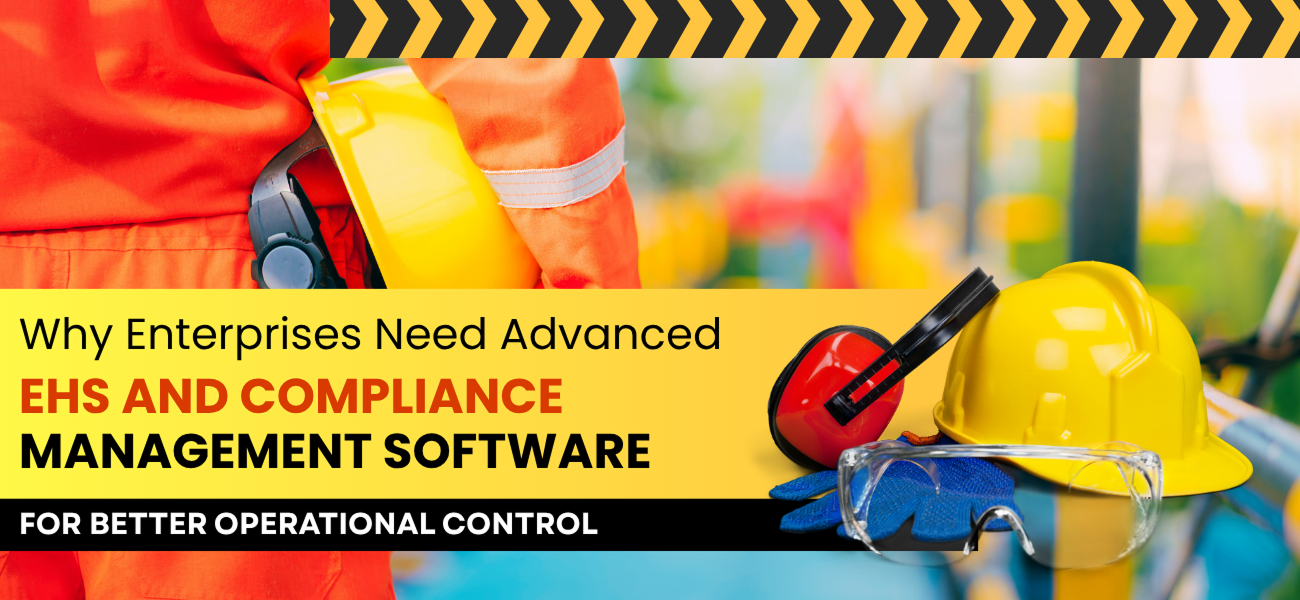
In today’s complex and highly regulated business environment, maintaining safety, compliance, and operational efficiency is more challenging than ever. Enterprises across industries face increasing pressure to adhere to strict regulations, minimize risks, and ensure workplace safety—all while maintaining productivity and profitability.
This is where enterprise EHS solutions and modern compliance management software play a critical role. By enabling safety digital transformation, organizations can move from reactive risk management to proactive, data-driven decision-making.
Let’s explore why advanced EHS and compliance systems are essential for better operational control.
The Growing Complexity of EHS and Compliance
Enterprises today operate in a landscape defined by:
- Stringent regulatory requirements
- Increasing workplace safety standards
- Complex global operations
- Rising environmental and sustainability expectations
Traditional methods such as spreadsheets, manual audits, and disconnected systems are no longer sufficient. They often lead to:
- Data silos
- Human errors
- Delayed reporting
- Compliance risks
To overcome these challenges, businesses are adopting enterprise EHS solutions that centralize and streamline safety and compliance processes.
What Are Enterprise EHS Solutions?
Enterprise EHS (Environment, Health, and Safety) solutions are integrated digital platforms designed to manage workplace safety, environmental compliance, and risk management across the organization.
These solutions provide:
- Real-time visibility into safety performance
- Centralized incident reporting and tracking
- Automated compliance workflows
- Data-driven insights for risk prevention
When combined with advanced compliance management software, they create a unified system that ensures regulatory adherence and operational efficiency.
The Role of Compliance Management Software
Compliance management software helps organizations track, manage, and enforce regulatory requirements across different regions and departments.
Key capabilities include:
- Automated compliance tracking and reporting
- Audit management and documentation
- Policy management and enforcement
- Regulatory updates and alerts
By digitizing compliance processes, enterprises reduce the risk of penalties, legal issues, and reputational damage.
Why Safety Digital Transformation Matters
Safety digital transformation is the process of using digital technologies to improve safety outcomes and operational control. It goes beyond automation by integrating data, analytics, and intelligent systems into safety management.
This transformation enables organizations to:
- Predict and prevent incidents
- Improve decision-making with real-time data
- Enhance employee engagement in safety practices
- Build a proactive safety culture
Instead of reacting to incidents, businesses can anticipate risks and take preventive actions.
Key Benefits of Advanced EHS and Compliance Solutions
1. Improved Operational Control
With centralized data and automated workflows, enterprises gain complete visibility into their operations. This allows leaders to monitor performance, identify risks, and take corrective actions quickly.
2. Enhanced Regulatory Compliance
Modern compliance management software ensures that organizations stay updated with changing regulations and maintain proper documentation for audits.
This reduces:
- Compliance violations
- Legal risks
- Financial penalties
3. Proactive Risk Management
Advanced enterprise EHS solutions use analytics and AI to identify potential hazards before they lead to incidents.
Features like:
- Risk assessments
- Predictive analytics
- Incident trend analysis
help organizations shift from reactive to proactive safety management.
4. Increased Efficiency and Productivity
Automation eliminates repetitive tasks such as:
- Manual reporting
- Data entry
- Compliance tracking
This allows employees to focus on strategic activities, improving overall productivity.
5. Better Decision-Making
With real-time dashboards and analytics, decision-makers can access accurate data instantly.
This leads to:
- Faster responses
- Data-driven strategies
- Improved operational outcomes
6. Stronger Safety Culture
Digital tools encourage employee participation in safety programs through:
- Easy incident reporting
- Mobile accessibility
- Training and awareness modules
This fosters a culture where safety becomes a shared responsibility.
Real-World Applications Across Industries
Manufacturing
EHS solutions help monitor equipment safety, reduce downtime, and ensure compliance with environmental regulations.
Construction
Digital safety systems track site risks, manage permits, and ensure worker safety in high-risk environments.
Oil & Gas
Advanced compliance tools manage complex regulations and prevent hazardous incidents.
Healthcare
EHS platforms ensure patient and staff safety while maintaining regulatory compliance.
Logistics
Safety digital transformation optimizes fleet safety, warehouse operations, and risk management.
Challenges Without Advanced EHS Systems
Organizations that rely on outdated systems often face:
- Lack of real-time visibility
- Increased risk of incidents
- Compliance gaps
- Inefficient audits
- Poor data management
These challenges can lead to operational disruptions and financial losses.
Best Practices for Implementing EHS and Compliance Software
To maximize the benefits of enterprise EHS solutions, businesses should:
Define Clear Objectives
Identify key goals such as risk reduction, compliance improvement, or efficiency gains.
Choose the Right Platform
Select a solution that integrates seamlessly with existing systems.
Invest in Training
Ensure employees understand how to use the software effectively.
Leverage Data and Analytics
Use insights to continuously improve safety and compliance processes.
Focus on Continuous Improvement
Regularly update and optimize systems to adapt to changing needs.
The Future of EHS and Compliance Management
The future of safety digital transformation is driven by advanced technologies such as:
- Artificial Intelligence (AI)
- Internet of Things (IoT)
- Predictive analytics
- Mobile-first platforms
These innovations will enable:
- Real-time hazard detection
- Automated compliance reporting
- Smarter risk management
Enterprises that adopt these technologies will gain a significant competitive advantage.
Conclusion
In a world where safety, compliance, and efficiency are critical to success, investing in advanced enterprise EHS solutions and compliance management software is no longer optional—it’s essential.
By embracing safety digital transformation, organizations can achieve better operational control, reduce risks, and build a safer, more resilient workplace.
The shift from manual processes to intelligent, digital systems is transforming how enterprises manage safety and compliance—empowering them to operate smarter, faster, and more efficiently.